Newsletter Subscribe
Enter your email address below and subscribe to our newsletter

 ByJohn A
Artificial intelligence reshapes warehouse operations through data-driven decision making and real-time visibility. Predictive analytics forecast demand and inventory shifts, while AI-driven automation optimizes routing, picking, and energy use. Implementations hinge on strategy alignment, modular deployment, and robust data governance to manage risk and ethics. The result is measurable gains in throughput and accuracy, yet deployment complexity and workforce implications demand careful planning. The next step requires concrete metrics and governance to chart a viable path forward.
AI transforms warehouse operations by integrating data-driven decision-making, automation, and real-time visibility to optimize throughput and accuracy. The approach analyzes sensor feeds, slotting, and routing, enabling adaptive workflows and measurable gains.
Ethical implications arise in the ethics of automation, prompting governance and transparency.
Workforce retraining becomes essential as roles shift, ensuring skilled, resilient teams align with continuous optimization and scalable, freedom-driven efficiencies.
See also: newspostbulletin
Predictive analytics for demand and inventory leverages time-series forecasting, machine learning, and causal models to anticipate fluctuations in order streams and stock levels. It quantifies uncertainty, aligns replenishment with service goals, and reduces stockouts and overstock. Predictive analytics enables informed decision making, while demand forecasting integrates seasonality, promotions, and macro trends. This data-driven approach supports autonomous, flexible inventory strategies for liberated operations.
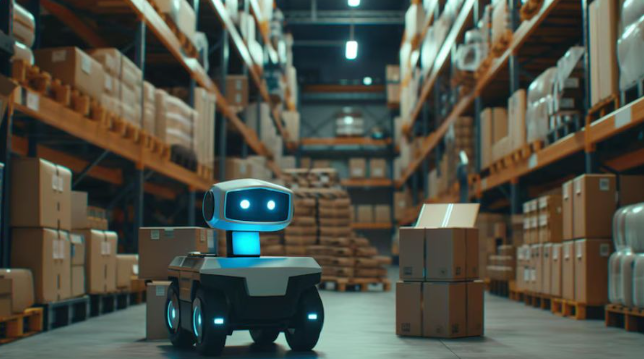
Automation-enabled workflows in warehouses integrate robotic systems, optimized routing, and real-time logistics to close the loop from predictive demand signals to executable operations.
The approach emphasizes autonomous picking and energy optimization, balancing throughput with sustainability.
Data-driven sensing informs route recalibration and task assignment, while modular robotics enable scalable deployment, fault-tolerant operations, and continuous performance monitoring across multi-zone fulfillment networks.
What are the essential steps to implement AI in a warehouse, and how do organizations measure progress while controlling risk? The approach emphasizes strategy alignment, modular deployment, and data-driven decision making. Metrics emphasize performance benchmarks, throughput, and defect reduction. Risk assessment timelines guide pilots and scale. Data governance ensures quality, traceability, and compliance to sustain adaptable, autonomous operations within a controlled, freedom-loving operational culture.
AI systems enforce data privacy via access controls, encryption, and anomaly detection, while data governance frameworks mandate provenance, retention, and audit trails; warehouses standardize consent, minimization, and cross-system policies to sustain security, transparency, and freedom to innovate.
Like a quiet storm, hidden costs emerge during AI implementation budgeting, complicating ROI. The analysis shows procurement, integration, and training expenses escalate beyond initial estimates, demanding rigorous cost-tracking, scenario modeling, and ongoing governance for sustainable, data-driven efficiency gains.
AI cannot fully replace human autonomy; ai decision making complements judgment, but limits persist. Data-driven systems enhance efficiency while preserving oversight, enabling individuals to retain strategic influence, risk assessment, and creative problem-solving essential for freedom in complex operations.
AI reshapes warehouse training by layering adaptive curricula, boosting retention, and shortening ramp-up times. It supports AI training pedagogy and skill upliftment, yet human mentors remain essential for interpretation, safety judgment, and context-driven decision-making in autonomous workflows.
Common failure modes include data boundaries being breached, mislabeled inputs, drift in performance, and overreliance on proxies; without rigorous validation, models misinterpret signals, degrade under novel conditions, and obscure latent biases impacting decision quality.
AI reshapes warehouse operations through data-informed decisions, automated movement, and real-time orchestration. Predictive analytics sharpen demand and inventory insights; autonomous systems optimize picking, routing, and energy use; and transparent governance mitigates risk while preserving service quality. The result is a tightly woven, scalable network that learns and adapts from performance signals. metaphor: like a lighthouse in a fog of data, AI-guided warehouses illuminate optimal paths, guiding every task toward efficiency, resilience, and measurable outcomes.